

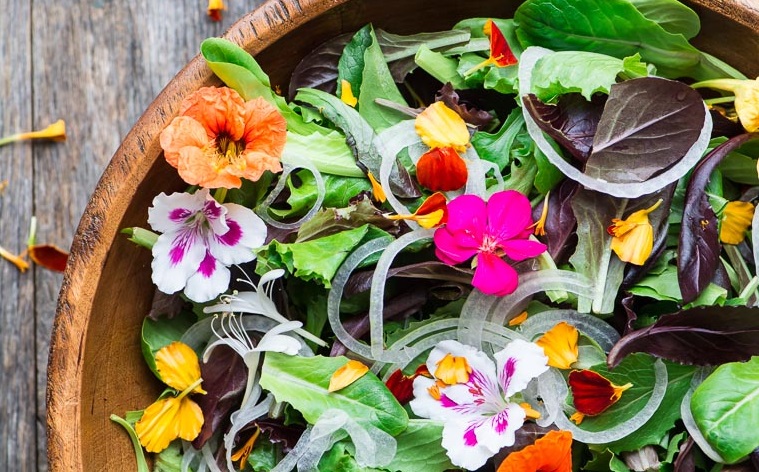

Edible flowers are something I have wanted to touch on for a while and since it is spring time here in South Africa again I thought this would be the perfect time. Adding flowers to your food can be a nice way to add colour, flavour and a little pizazz. Some are spicy, some herbaceous, and some are floral and fragrant, but whatever their flavour here are 10 edible flowers that you can use to brighten up your next meal.
Nothing says fancy like a handful of colourful flower petals in a salad or a sautéed day-lily bud in a stir fry. Most edible flowers are best eaten raw — simply pick and rinse with water. Flowers will taste and look their best right after they have opened, rather than after they have been open for a few days.
Before you rush to the garden and pick every flower in sight, there are some basic safety precautions you should follow. Only eat flowers you know to be edible. If you are uncertain, consult a reference book on edible flowers and plants (or this list). Flowers from the florist have probably been treated with pesticides so try to eat only flowers that you have grown yourself or know to be safe. Eat only the petals, and remove pistils and stamens before eating. It should go without saying that if you suffer from allergies then approach edible flowers with caution.
So which flowers should you be eating? Here’s a handy list of 10 of the most common edible flowers.

Sunflower
Sunflowers are probably the most recognisable flowers on this list. There are many ways to enjoy your sunflowers, you may eat sprouts straight from the ground, atop salads or in a stir-fry. Once they start budding you can eat the whole bud – they taste very similar to artichokes! And yes, even the petals are edible, use them in a salad to add a distinctly bittersweet flavour but make sure your other ingredients compliment and tone down the flavour of sunflower petals.
Fennel
Fennel flowers are a pretty yellow colour with a subtle licorice flavour much like the leaves of the plant. Fennel is versatile and you don’t have to stop at the flowers – the bulbs are also edible – thinly sliced raw fennel bulb adds a sweet licorice flavour and crunchy texture to salads. Use the flowers to garnish salad or fish dishes.
Citrus blossom
Lemon and lime blossom you might already be familiar with but did you know you can also use more exotic citrus flowers in your cooking? Try citrus blossoms such as grapefruit and kumquat if you can get hold of them. Citrus blossoms are sweet and highly scented, so use them sparingly otherwise they can overwhelm the dish you are preparing. Citrus blossoms can be added to sweet and savoury dishes alike and they can be used fresh, dried or frozen or even as a syrup.
Lavender
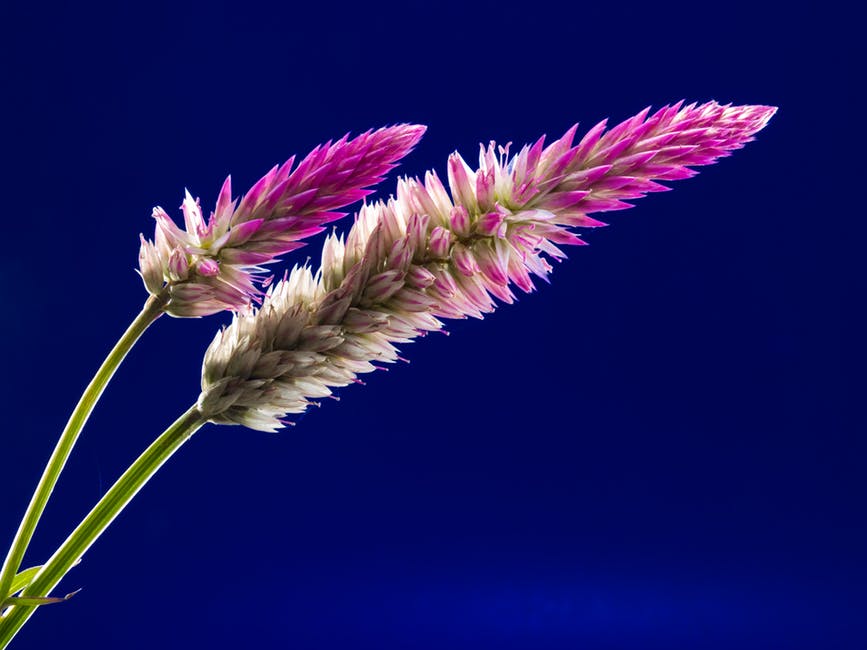
Another popular edible flower, lavender has a sweet, spicy and perfumed flavour with a hint of rosemary and mint. I’m sure you are familiar with the soothing properties of lavender scent but they are also a perfect addition to both savoury and sweet dishes and are used in a multitude of beauty products. Use sparingly in sweet dishes as a little goes a long way.
Nasturtium
Brightly coloured with a powerful flavour, nasturtium blossoms are bursting with a spicy pepper finish. They have a peppery, spicy flavour; a cross between watercress and a radish and when the flowers go to seed, the seed pod is a marvel of sweet and spicy flavours. You can stuff flowers, add leaves to salads, pickle buds like capers, and garnish fish, salad or starters. Nasturtiums are available in trailing or upright varieties and their colour ranges from yellow through oranges to red. Every part of a nasturtium is edible: petals, leaves, and seeds.
Violets
Small, delicate and pretty violets are floral, sweet and beautiful as garnishes. Use the flowers in salads and to garnish desserts and drinks or add brightness to planters, lollipops, ice cubes, and cupcakes. They have a sweet, green flavour. Violets have a gorgeous colour which makes them a fun flower to use to decorate cakes and as garnishes and they even boast a variety of healing benefits. Violets are rich in antioxidants, can help with headaches, relieve pain, and have been known to help patients with insomnia. Violets have anti-inflammatory properties and are good for respiratory ailments so not only are they pretty but they’re good for you too.

Roses
The most romantic of all the flowers roses are great for eating too. Roses offers a sweet flavour with a slight spice. While roses have a strong floral scent, their flavour is quite subtle and fruity. As a general rule the darker the petals, the more pronounced the flavour. All roses are edible, but before consuming, remove the bitter white portion of the petals. Roses lend themselves well to everything from soups and salads to teas, jams, and desserts. Rose petals also help to smooth skin and gums, dry out excess mucus and relieve indigestion, bloating and congestion.
Echinacea
Commonly known as coneflower, echinacea is a well-known medicinal herb. Its powerful healing properties have made this herbaceous plant a popular home remedy for colds. Although most of its properties are found in the roots and seed head, the petals are edible and will add a colourful splash to your dishes with the added benefit of its healing properties.
Hibiscus
Hibiscus petals taste a little bit like cranberries making these edible flowers perfect for teas and cocktails. Another healing flower, hibiscus contains antioxidants that help prevent cholesterol deposits and that have been proven to lower high blood pressure and help with circulation. As I mentioned they are great in teas, and cocktails but you can also use them in baking or savoury dishes. Try dropping fresh hibiscus flowers into a glass of bubbly at your next dinner party to impress your guests.

Pansies
Pansies are a favourite edible flower as they come in so many different colours and have a slightly minty flavour, so they work well in herb-flavoured summer cocktails and fruit salads. For a quick, easy, and festive summer hors d’oeuvre, spread some cream cheese on a small round cracker and top it with a whole pansy. Some pansies have a delicate fragrance and are so pretty that they are perfect for candying and decorating cakes and baked goods.
I’ve always been fascinated by the use of flowers in cooking and I hope you have learned enough in this article to turn your next summer time outdoor party into a beautiful floral display.
Bon Appetit’

